About
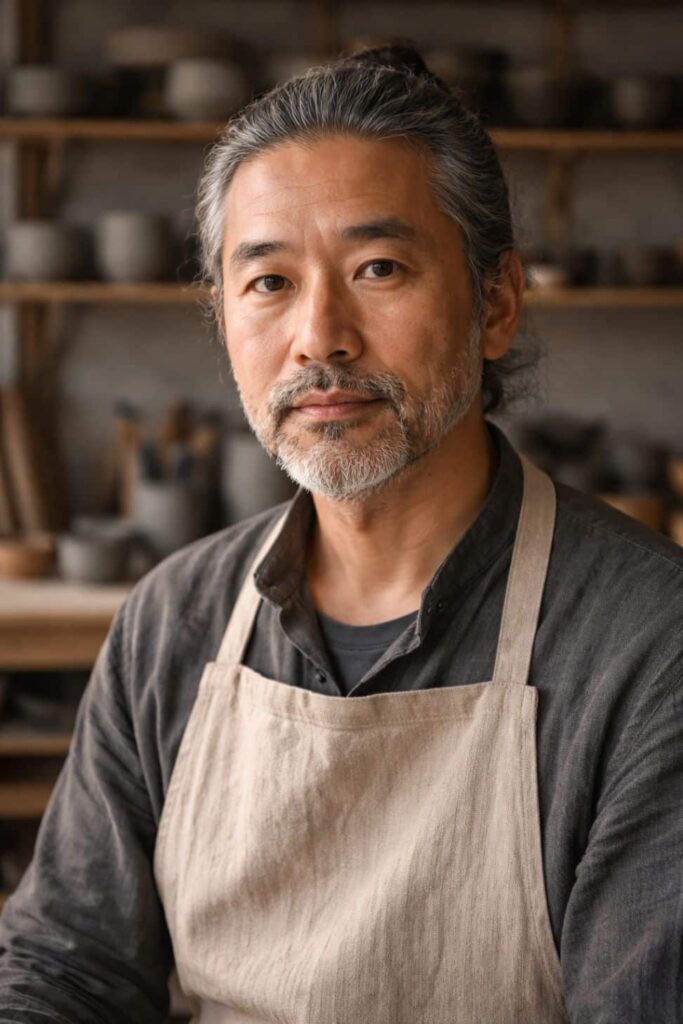
For Hector Konomi, ceramics are not simply objects but records of human experience. His work sits at the intersection of material, tradition, and daily ritual—where clay, fire, and use slowly tell a story. Educated in fine arts in Tokyo, Konomi’s path shifted decisively toward ceramics through sustained exposure to Japanese craft culture and tea aesthetics. He became drawn to the continuity of form in Japanese pottery: how a teapot can evolve across centuries while remaining unmistakable to the hand. This fascination led him to Tokoname, where disciplined repetition, wabi-sabi imperfection, and respect for process form the backbone of practice. Konomi is especially known for hand-forming (tebinēri) techniques, allowing controlled asymmetry and subtle surface tension that distinguish high-end Tokoname teaware from purely wheel-thrown work. Material choice is central to his philosophy. Konomi favors iron-rich clays and subdued mineral surfaces, often leaving interiors unglazed to allow direct interaction between clay and tea. He works across electric, gas, and wood firings, viewing flame as a collaborator rather than a controllable tool. Ash paths, flashing, and atmospheric variation are welcomed as part of the final composition. Beyond the studio, Konomi is also a respected technical communicator. His writing on vessel-making outlines clear, practical workflows—emphasizing clay–firing compatibility, even wall construction, slow drying, glaze testing, and the use of witness cones. His voice reflects a maker shaped as much by repetition and failure as by formal instruction. Influenced by interests in anthropology, climate, and human conflict, Konomi frames his vessels as cultural carriers. Each teapot or bowl becomes a small archive—where a thumbprint, softened rim, or ash veil records the meeting of people, landscape, and tradition.